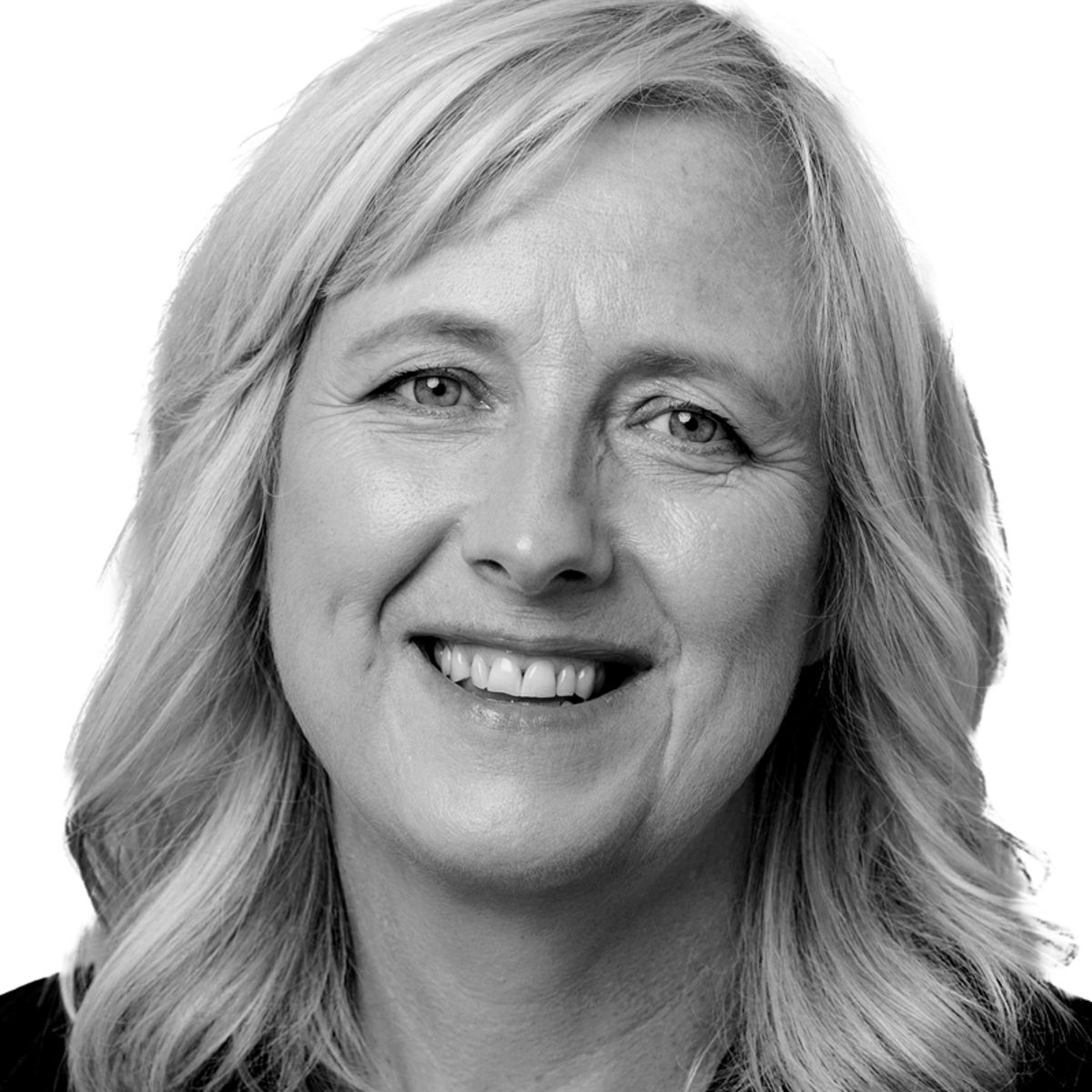

Stephen Sackur presented HardTalk on BBC World News and the World Service for more than two decades until the corporation cancelled it in March 2025. His new book, Hard Truth: Investigations That Shook the World – and Why They Matter Now, profiles 10 journalists who exposed shocking abuses of power, and its final chapter is about Carole Cadwalladr, co-founder of the Nerve. She interviewed him at the Conduit in London at an event hosted by the Nerve and How To Academy. This is an edited extract of their conversation.
You were told HardTalk was being cancelled in a meeting room named after Jill Dando
Even while they were telling me, I couldn't help thinking that was really weird. The woman who fired me had been one of my bosses for about three years, but she'd never actually met me. She'd actually never even sent me an email. So our first exchange was when she said: "Sorry, Stephen, but we're closing your show.” That says something about the BBC's bureaucracy, I guess.
I’m not one of those people who gets fired and turns bitter about the BBC. I love it. But I thought it was a mistake. HardTalk was the last internationally focused, long-form, rigorously researched interview show. There wasn’t anything else like it.

Stephen Sackur interviews IMF director Christine Lagarde (L) on stage, Washington DC for the BBC's Hardtalk, April, 2016. Photo: Getty
The BBC doesn't seem to have understood the global reach of it. Across video and audio you put the audience at 170 million people.
The surveys said that there were 75 million people watching it on TV at least once a week [and] the reach of World Service radio is extraordinary.
So it was something that cut through. I did a really combative, I hope, rigorous, challenging interview with Meles Zenawi, the strongman prime minister of Ethiopia, which he got very angry about.
When I went back to Ethiopia, people would say to me: “Stephen, that interview meant so much to us because nobody in our own media is allowed to do that kind of interview with the man who leads our nation.” Some people had learned whole exchanges and quoted them back to me. He said this, and then you said that. It was extraordinary how much it meant to people, and I loved that.
You have been eyeball-to-eyeball with some of the strong men who rule the world. Who was the worst?
The most awful archetypal dictator I interviewed was Teodoro Obiang. He's the dictator ruler of a tiny country in West Africa called Equatorial Guinea. My team had rigorously researched all the watchdog reports on the scale of his corruption and he is a massive kleptocrat.
He invited his whole cabinet to watch: they were lapdogs, nodding every time he opened his mouth. He didn't care that, on the facts, I had him bang to rights. He just smiled and he said: "Stephen, you have no idea about what my people are feeling.” Well, I said, I actually have an idea of what they're feeling because I've been to the shanty town where there's no electricity, no water, you know, a mile from your presidential palace.
But none of this mattered because in a society like his, there is no accountability. I was doing accountability journalism with a guy for whom accountability meant nothing. The world needed to know that Teodoro Obiang is a massive crook and a liar, but my interview with him didn't really change anything.
The obvious book for you to have done would have been a book about what you'd learned from interviewing some of the most powerful people in the world. Whereas actually you’ve mostly written about journalists who worked outside big institutions.
The interview format is quite a safe environment. It has certain rules to it, and I was protected by the BBC badge. I would go to difficult places like Ethiopia, Yemen or Venezuela, and I would ask very tough questions to people in power – but they knew the consequences of how they were answering were limited. I was, in a sense, part of a power game.
The radical nature of the book is that I've come to sort of reflect on how I was an insider. I was trained by the BBC and I was always an insider. Many of the journalists in this book refused to be insiders: Anna Politkovskaya in Russia, Daphne Caruana Galizia in Malta, or Lydia Cacho in Mexico. They were mavericks. They were not clubbable. They couldn't hack it inside news corporations, because that was not their temperament or their style. They took risks to confront power by deep-dive investigation in ways I did not. I'm proud of the journalism I did within its own context, but they had moral courage at a level which I've never had to exhibit, and I'm not sure that I have it.

Protesters in Malta remember Daphne Caruana Galizia, November 2019. Photo: AFP/Getty
‘Moral courage’ is a phrase you borrow from Anthony Feinstein.
He’s a South African neuropsychiatrist who became interested in what motivates journalists working in the most extreme conditions, and that was his definition of what these journalists shared.
I was a guy who would get on a plane, report on a war or interview a very powerful person – and then get the hell out. These journalists were reporting on their own communities and living among the people they were reporting on. At the end of any day when they had reported on things that were extremely awkward for people in power to listen to, they couldn't take refuge in a safe place. They had a very strong moral sense that they wanted their own communities to be better.
Daphne Caruana Galizia, for example – she wanted so badly her small island of Malta to do better and be better, and that was underpinning all of her journalism. The BBC training manual doesn't really talk about morality, but I am talking about morality.
‘I was a guy who would get on a plane, report on a war and then get the hell out. These journalists were reporting on their own communities’
[Audience question] Most of the journalists in the book are women. Was that intentional?
No, but that's the way it's worked out. So I asked one of the best, Amira Hass, an Israeli journalist who works for Haaretz. She said: “Stephen, I don't know why you're so surprised.” She's an Israeli Jew, the daughter of Holocaust survivors, and she's the only Israeli journalist to have lived in Gaza, for about five years, and she has lived in Ramallah for the past two decades, reporting on the occupation for an Israeli readership. Her point was that girls learn pretty early on in most of our societies that things aren't designed for them. So they push, question authority and the way things work, because it's not a woman's world. It was no surprise to her that so many of the journalists in the book were women.
You were schooled in BBC impartiality. But we are now in a completely different media environment. Is impartiality fit for purpose?
The problem with impartiality is that it implies you keep a deadpan face. You uncover some facts, put them out there, and then you walk away, because it's not your problem. I've realised that's not actually enough in today's information landscape. You’ve got to fight for the truth sometimes because there's so many forces trying to suppress it.
There's an extraordinary woman in Mexico called Lydia Cacho. She exposed a child sex trafficking ring that involved political and corporate titans in Mexico. But she didn't just tell that story; she fought in the courts to bring these people to justice. In the BBC guidebook, that's nowhere, but she could not live with her own conscience if she'd done the reporting and it didn't make a difference. I've come to feel that that really matters. My career went down a different path, but that's the path that I admire most
So does BBC-style journalism still have a place?
The BBC in me wants to avoid that question. It's not binary. It depends what kind of journalism you're trying to do. I'm talking about power-challenging investigative journalism because that's the most important kind of journalism to me. The BBC is never going to be at the forefront of that in the future. The BBC lacks moral courage.
Which isn't to say I think the BBC's journalism is no longer relevant. Trying to find a way through
Russia-Ukraine or Israel-Palestine to get, as Carl Bernstein puts it, “the best obtainable version of the truth” – that is still important.
I know you, Maria Ressa and others talk now about journalism being a form of activism for truth. I'm interested in that phrase, but I don't think you should therefore lurch to a position where the BBC's impartiality-driven, less investigative and challenging journalism is no longer of any importance at all.
‘Girls learn pretty early on in most of our societies that things aren't designed for them. So they push, question authority and the way things work’
Where does the BBC’s impartiality break down?
In deep-seated conflicts where the pressures are very intense. Think about the way the BBC reported Gaza. Every time it gives the death toll from the Hamas ministry of health, it adds the words that the British government, along with many others, has listed Hamas as a terrorist organisation. That was a rule sent down from the top senior editorial team to every single journalist covering that story. But every time the Israelis made an official denial of firing missiles at a civilian apartment block and killing women and children, or when they hit a food kitchen, and killed aid workers, the BBC would never say the Israeli government is led by a prime minister subject to an International Criminal Court arrest warrant.
BBC's notion of impartiality is a difficult thing to sustain. While I was inside the organisation, I had to accept it. I had a niche where I could interview the leadership of Hamas in Qatar, Netanyahu and leaders of the Jewish settlement in the West Bank – and I would give them all the same challenging, rigorous, researched interview. I could live with my conscience. But it's difficult for me to justify the BBC talking so rigorously about impartiality and then reporting that way, and in other conflicts too – it's not just about the Middle East.
Now you are free to say what you couldn’t on staff.
I can now say things that would have broken my BBC contract. I think there is moral failure at the heart of British government policy on the Middle East. It's changed a little bit with Andy Burnham in power and Ed Miliband. But the government talks about its revulsion with, for example, Jewish settler violence on the West Bank, but actually continues to have deep security alliance with Israel, which includes the continued selling of military hardware to Israel. I don't understand that, and it's something I would like to explore. But I want to use evidence and research. I don't want to become a shouty opinion influencer. That's not my temperament.

Amira Hass of Haaretz. Photo: Alex Kent / Getty
News organisations have shown very little solidarity with the journalists killed in Gaza and Lebanon. Why?
I think there is a fear involved that reflects the power of Israeli messaging. Amira Hass pointed me in the direction of some extraordinary work done by +972 magazine, a progressive Israeli magazine, which uncovered evidence that the Israeli intelligence services were planting false stories about ties between Palestinian journalists in Gaza to Hamas, to justify the killing of those journalists. The Israelis denied it. But +972 is very serious.
Your final chapter comes back to Britain.
I didn't want it to be a book that you could read and think “that's really troubling, but thank God it doesn't apply to us”. We're not China, we're not Putin's Russia, we're not Modi's India or the Malta that Daphne Caruana had to deal with. But we have worrying pressures on our journalism here too.
You broke the Cambridge Analytica story about the misuse of data harvested from Facebook, You challenged unaccountable technology companies, and it rang an alarm bell that is still ringing – ever louder each year since. But you faced legal warfare from people you’d written about. Many journalists would have settled and tried to get on without ruining their professional and personal lives. You refused. You fought, and it cost you an awful lot. I wanted to understand what drove you to keep fighting. We need to think really hard about making sure that independent investigative journalists can thrive, [that they can] tell their truths, and not be facing so-called Slapps, strategic lawsuits against public participation, and other means by which people try to close truth-telling journalism down.
Is there a newly radicalised Stephen Sackur who's going to be unleashed?
Are you offering me a job on the Nerve? There's a line in my chapter where you’re heading back to the office with your dog, Griff, and I reflect: she calls it the Nerve and Carole clearly has it. The question is, have the rest of us?
Hard Truth: Investigations That Shook the World – and Why They Matter Now by Stephen Sackur is published by Headline Press (RRP £25; buy it at a discount at the Nerve Bookshop)