
Hannah Spencer: plumber, plasterer, MP
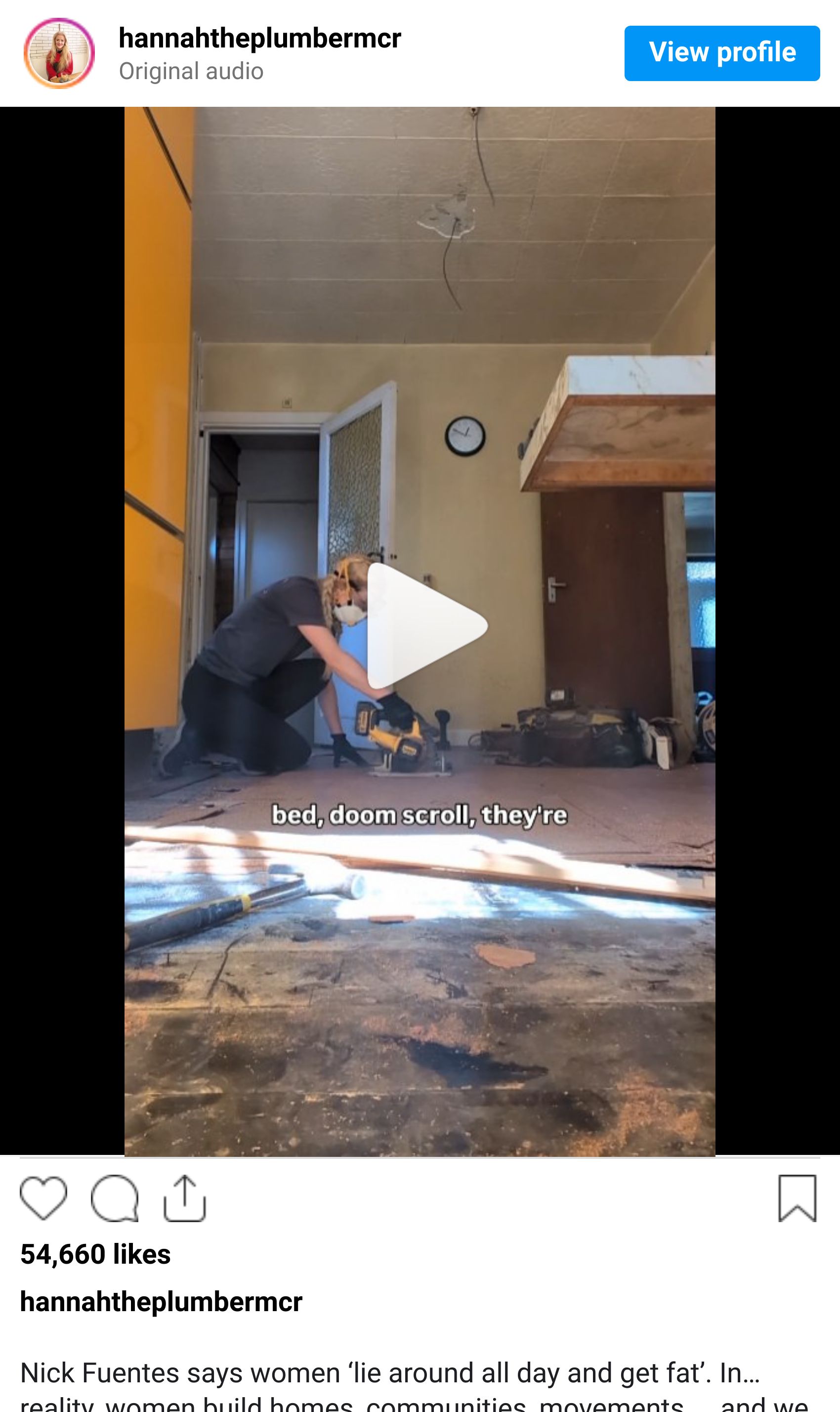
Plumber and plasterer Hannah Spencer’s striking victory in last month’s Gorton and Denton byelection sent shockwaves through British politics. The Green party candidate’s decisive success over Reform UK and Labour has piled new pressure on ailing prime minister Keir Starmer and knocked Nigel Farage’s ascent towards Downing Street off course. Certainly the most consequential election of my lifetime, Spencer’s victory has been analysed and picked over by pundits everywhere. Everywhere, that is, except in her own industry. The story of a construction worker making British political history has, bizarrely, gone mostly ignored by the construction press.
From the housing crisis to climate breakdown, and high speed rail infrastructure to economic stagnation, construction is deeply entwined with almost every major strategic challenge facing Britain. As the former MP for Kensington Emma Dent Coad wrote in 2024, “the need for politicians who understand the built environment has never been greater”. She should know; Dent Coad was elected just days before the Grenfell Tower Fire broke out, killing 72 of her constituents, following the installation of flammable external cladding panels. The ensuing public inquiry found a litany of catastrophic failures at every level of the design and construction process, from indifferent local authority building managers to construction material manufacturers fudging fire safety tests to shoddy installation by builders onsite.

Perhaps if ministers had had a better sense of the underhand practices of the multinational manufacturers supplying Britain's complex housebuilding sector, better policymaking and regulation could have prevented the tragedy. Yet when an actual construction worker – someone who could help platform those issues in parliament – storms to a seat in the House of Commons, she is met with near silence from her sector's journalists. Spencer is surely now the highest-profile built environment professional in the country, so why is her election victory not bigger news in the built environment media?
Sexism or anti-Green party bias could perhaps be to blame, but many of the editors of Britain’s most prominent built environment magazines are, in fact, women, and sustainability issues are generally covered in depth these days. I suspect there is another explanation for the disinterest in Spencer’s story, one which connects to the wider British construction crisis: class snobbery. An assumption that tradespeople, even when redefining the political landscape, simply aren't interesting enough to merit attention. Had a prominent architect or town planner achieved such a landmark victory, their face would have been plastered across the construction press. But a plumber?
“A tradesperson is nothing here,” Barbara Jones, a veteran builder with over four decades of experience on construction sites in the UK and Europe, tells me. When Jones began her career in the 80s, she was surrounded by skilled peers who felt valued by society and took pride in their work. Today, she’s seen that pride evaporate as manual trades have been robbed of their dignity and status. “There is no valuing of practical skills in schools any more,” she laments, “and there's this whole ethos that everyone should go to university, as though only the thick people do trades.”
For Jones, the denigration of UK tradespeople is not just a classist blindspot in society, but a contributing factor in the wider crisis of British construction. She fears that many of the chronic issues that plague Britain’s buildings – from insulation installed so badly across tens of thousands of homes that it has to be re-done to new towers already riddled with mould – can be traced to social contempt for manual labour. Successive governments, obsessed with expanding universities, have effectively devalued non-academic careers to the point that becoming a builder, carpenter, plasterer or plumber is no longer aspirational, as it still is elsewhere in Europe.
In 1979, around 16% of Britain’s MPs came from a background of manual work, but by 2015 that had dropped to just 3%
Worse, the collapse of skilled trades in the UK is holding back our transition to a greener economy, as many British contractors lack the knowledge and training to adopt more ecological construction techniques. “I have to meet my European colleagues, and I'm embarrassed,” Jones tells me. “They are shooting ahead with sustainability. France are 20 years ahead of us and they were behind us when I first started!”
The eroding status of trades in Britain is echoed in politics. In 1979, around 16% of Britain’s MPs came from a background of manual work, but by 2015 that had dropped to just 3%. Stonemason Pierre Bidaud – one of very few UK-based contemporary construction workers to have achieved some public notoriety, for his pioneering low-carbon structures – described the lack of blue-collar workers holding elected office as “a stain on our democracy”.
The silence greeting Hannah Spencer’s groundbreaking entry into parliament from the very editors and journalists charged with covering her industry speaks volumes. It reveals that many still believe the ideas and insight of a plumber simply couldn’t be of interest to other architecture and construction professionals working in the built environment. What should have been a moment of pride for the sector instead highlighted how divided the industry has become from the tradespeople who sustain it.
A few years ago, a childhood friend packed in the unrewarding desk job he’d landed after university and retrained as a builder. He’s happier now than I’ve ever known him and able to bring meaningful satisfaction to his clients. One year, I took him to the opening of the Venice Architecture Biennale and will never forget the consternation on the faces of the curators and architects we met. “A builder at an architecture exhibition?” they seemed to gasp – as if buildings could exist without the people who build them.
Britain’s construction sector is rightly pilloried at times for its too-often-abysmal workmanship and endemic culture of cost-cutting. But a better standard of construction will only become the norm when construction workers themselves are better supported with proper training, decent working conditions, social respect and political representation. Whether or not Hannah Spencer can change parliament's relationship with construction, she has already changed what it means to imagine a construction worker’s place in British public life, and that’s a start. The buildings we get are, in the end, a reflection of the respect we are willing to extend to the people who build them.
Phineas Harper is an architecture writer and broadcaster. They are the chair of the 2026 Architectural Association of Ireland Awards and a former chief executive of Open City. @phinharper