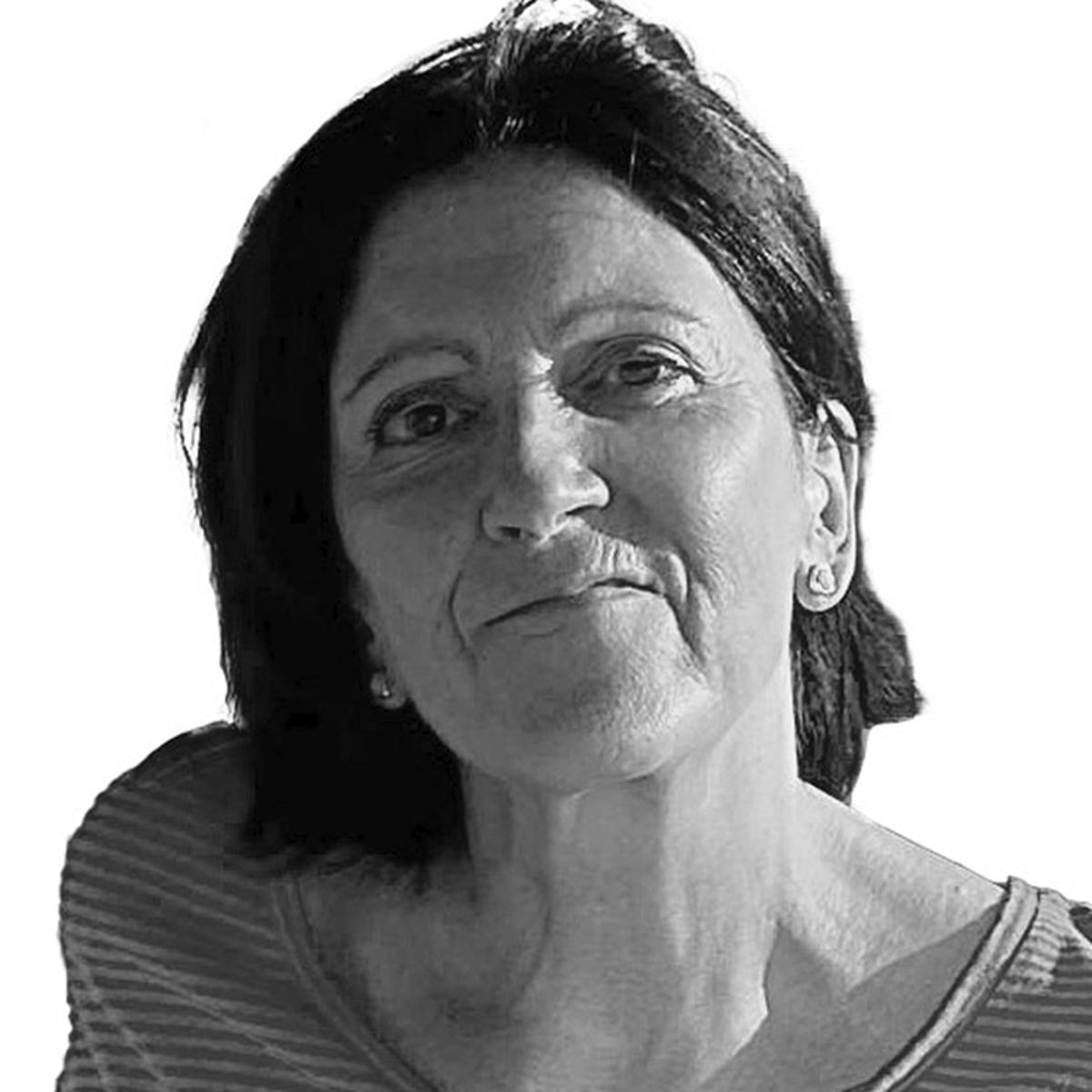

Ash Sarkar photographed by Tee Max at her publishers’ offices for the Nerve.
Political writer and journalist Ash Sarkar grew up in north London and found a place in her heart for both Marxism and Tottenham Hotspur early on, influenced by a social-worker mother who was “as leftwing as fuck” and had two house rules: no Arsenal fans, no Tories. Her politics were further informed by student activism: marches against the Iraq war and Operation Cast Lead (the 2008-09 war in Gaza). But the “really big one; the formative one” happened while she was studying English literature at University College London. The trebling of tuition fees led to her and students all over the country organising and occupying their universities in protest, an experience she now feels led to “so many really important things”, including friends for life and the independent leftwing media organisation Novara, where she still works as a contributing editor. An appearance on Good Morning Britain in 2018 brought her to a wider audience when a clip of her sparky response to Piers Morgan – “I’m literally a communist, you idiot” – went viral.
Now a regular guest across TV and radio – Question Time, Newsnight, The Moral Maze – in January 2025 she published Minority Rule, a book that argues for a return to the “traditions of the left” – anti-capitalism, egalitarianism – as a correction to an era of identity politics or “liberal individualism”, as she puts it, “that is less concerned with transforming society and more focused on being represented in it”. She examines the collaboration between a media and political class who promote identity-driven conflicts around race, gender and religion, creating “culture wars” that deliberately divide and distract from the concerns that should unite us: inequality, the widespread lack of affordable housing, utilities, education. “Making a virtue of marginalisation,” she writes, “makes it impossible to build a mass movement capable of taking on extreme concentrations of wealth and power.”
A Sunday Times bestseller, the book was widely praised – “If leftists feel they have been stumbling around in the darkness, Minority Rule flicks on the light” said the London Standard – and is now out in paperback with an updated afterword. Sarkar is 33 and lives in north London with her husband.
Do you feel despondent about politics?
Not really, and I'll tell you why. As I say in my book’s afterword, anyone who wants to advance their politics in the world in some way should ask themselves two questions: am I doing some kind of political activity which brings me into contact with human beings in real life? And am I putting my time towards building an organisation or an institution which aims to have a life beyond the news cycle? I feel like I can answer both of those questions with yes. Obviously trying to build a media organisation, which is what Novara is – and I'm sure that you guys [at the Nerve] know a lot about this feeling as well – is entering the political dojo with two hands tied behind your back, because you've got to do it while adhering to journalistic standards, right? You can't just be all in and unleash the fight. But I think that there is an inherent value to trying to provide people with high information content, and in trying to do that, I work with honestly the best and most talented people you could ever meet in your life. Some of them I've known since I was 18, so you have not just a tremendous sense of political purpose, but you know, you feel very held, very loved.
What do you think has gone so wrong for Starmer?
I don't think he has any politics or beliefs of his own, he just likes standing at the lectern and has outsourced his politics to other people, notably Morgan McSweeney – and now he's gone, Starmer’s flapping in the wind a bit. It was a parliamentary majority based on fewer votes than Corbyn got in 2019, but because of our first-past-the-post system that doesn't matter. They're in the right places, bam, you're in government. I think the way I phrase it in the book is that people don't win elections, places do.
He should have picked more fights: here's a wealth tax, corporation tax, here are some huge changes we're going to push through, front-load the pain from the markets, and we're going to do that nice and early, and then we've got some good stuff at the end. He didn't do that, and people aren't stupid. They can tell whether their lives are improving or not.
You felt Labour was your party when Corbyn was leader?
I didn't feel like it was my party. I only joined so that I could do more speaking at events and rallies in the lead-up to 2019, so I wasn't actually a member for very long at all. And it wasn't about Corbyn as an individual. I saw him as a vehicle for something – tax the rich, spend on public services, scrap tuition fees, no more adventurist warfare.
When I think about what makes me feel alive and what makes me feel human, it's novels.
What do you think of Zack Polanski, leader of the Greens?
He's really surprised me. He’s actually a much more canny, perceptive and assertive political operator than I first thought he was. The thing about the Greens that people need to understand is that this change of direction is very, very rational for them. Firstly, if you look at the top 40 seats where they came second in 2024, it's not rural, conservative constituencies – it's urban, multi-ethnic, working-class, lots of downwardly mobile graduates, so you're going to have to do a bit less frogs and trees and a bit more housing and wealth tax. Makes sense. And the second thing is that there was this huge space to the left of Labour just for the taking. And he was the guy who saw that.

Photo: Tee Max
Who would you vote for if there was an election tomorrow?
Depends on what's going on in my constituency. I am in David Lammy’s constituency. So it's whoever on the left would have the best chance of unseating him.
Who do you think will benefit from 16-year-olds being able to vote?
I imagine it might be Greens number one, Reform number two – I think the Greens will do better among young people than Labour.
What’s your view on banning under-16s from using social media?
Obviously it's a good idea. Everything we know about its relationship to anxiety, depression, low self-worth, the assault on and degradation of attention spans – you know, like biochemical responses, its impact on your cortisol – no 16-year-old needs that. Also [for all of us], time spent away from screens, being in community with people in real life, is both the biggest act of self-care that you can do, and it's also a really important act of resisting the creep of this technology into your life.
What would be the first thing you would do if you were made prime minister?
Probably nationalise energy, rail, mail, utilities and aristocratic land.
How do you relax?
By just hanging out with my friends: that experience of laughter, a full-body release that comes from your belly. Everyone needs it. I live with my husband and our best friend and the three of us just make each other laugh a lot. I mean, I can't give an example – because it is so stupid. We hang out watching WWE [wrestling] and become more and more hysterical.
Who should we read to be inspired by at the moment?
When I think about what makes me feel alive and what makes me feel human, it's novels. There is a [Gabriel Garcia] Marquez novel, Chronicle of a Death Foretold, which I adore – every time I read it, I cry my eyes out. So it's less about feeling the emotion of hope, it's about feeling human and being put into contact with all these parts of yourself, the full range of emotions. So, you know, read Marquez.
What or who brings you joy?
There's a cafe near me where they do these amazing chicken sandwiches, and I don't have to say my order out loud any more. One of my best mates from school lives on the next road to me, and so when we're both working from home, we'll be like “sandwich o’clock, mate”. And you go in and you feel like a local legend because you don't even have to say your order.
Give an example of a really simple change in how we live in the UK that you think would make an outsize difference.
Free lifelong education.
What is your favorite swearword?
“Fuck”. I can tell you my favourite one to hear, but I don't know if there's any way you can convey the accent. My husband's from Yorkshire and the way he says the word “twat” is amazing. There's a flatness and an aggression. So my favorite [to use] is “fuck” but to hear would be the way he's like “foocking twat”.
Does your mum think that you've got a real job now?
Oh, God, she wanted a doctor or a lawyer. But nah, she's fine now. She was really worried that the Novara thing wouldn't work out because for ages we were volunteers. We were paying for it by working in pubs or lecturing, and [co-founder] Aaron [Bastani] was selling fruit and veg at a market stall. And so she, poor thing, had her head in her hands, going “what's my child doing? She's never gonna be able to look after herself.”
Do you have any regrets?
This one's going to get me into trouble: the thing that popped into my mind is ketamine. Such a bad time. I was much younger and much stupider. That's the honest answer: ketamine. Don't do it. Every other thing that's gone wrong in my life, I think “I really learned from that – it was a valuable experience”, but with ketamine I think “just delete that from my life”.
A lesson of sorts, then …
Man, yeah – that and “hand wash only” means “hand wash only”. You cannot negotiate with a care label.
Minority Rule: Adventures in the Culture War is published by Bloomsbury (£10.99)